Landlord's Guide: Who Pays for Appliance Removal? (2026)
One of the most common landlord-tenant disputes: who is responsible when an appliance in a rental unit needs to go? The answer depends on who owns it, what the lease says, and what happened to it. Here's a clear breakdown — plus how to get rid of appliances for free.
Every landlord eventually faces it: an appliance in a rental unit needs to go, and questions arise about who's responsible and who pays. Is it the landlord's problem because the unit came with a refrigerator? Is it the tenant's problem because they brought in their own washer? What happens when a tenant moves out and leaves something behind? This guide covers the legal baseline and practical steps — including how to get appliance removal done at no cost.
The Legal Baseline: Landlord-Provided vs. Tenant-Owned Appliances
The single most important factor in any appliance dispute is who owns it. This usually falls into one of two categories:
Landlord-provided appliances are units that came with the rental as part of the lease agreement — listed in the lease or described in the unit listing. Refrigerators, stoves, dishwashers, and water heaters most commonly fall into this category. Because the landlord offered them as part of the tenancy, the landlord is responsible for maintaining them and for removing them when they reach end of life or need replacement.
Tenant-owned appliances are items the tenant brought in themselves — a personal washer and dryer, a portable dishwasher, a second refrigerator. These belong to the tenant. The tenant is responsible for removing them at move-out. If they don't, the situation becomes an abandoned property matter.
The lease should be explicit about which appliances are landlord-provided and what the tenant's obligations are regarding any appliances they bring in. Vague leases create disputes.
What Happens When a Tenant Leaves an Appliance Behind?
Tenant abandonment of property — including appliances — is governed by state law, and the rules vary considerably. The general process in most states:
Tenant moves out and leaves a personal appliance behind.
Landlord must provide written notice to the tenant's last known address (and often email) that the property has been left and will be disposed of after a specified waiting period.
Waiting period — typically 15 to 30 days depending on the state. Some states have different rules based on the estimated value of the property.
If unclaimed, the landlord may dispose of the property. In many states, reasonable disposal costs are recoverable from the security deposit.
Document everything: photograph the abandoned appliance in the unit with a timestamp, keep copies of your written notice to the tenant, and retain records of any disposal costs. This documentation protects you if the tenant later disputes security deposit deductions.
Which Appliances Are Typically Landlord-Provided?
Understanding the norm in your rental market helps set tenant expectations clearly. Across the US, here's how appliance provision typically breaks down:
Refrigerator and stove/range: The most universally landlord-provided appliances in both single-family rentals and apartment buildings. The vast majority of rental listings include these.
Dishwasher: Common in newer construction and mid-to-upper-tier rentals. Less common in older buildings and budget units. When present as a built-in, it's almost always landlord's responsibility.
Water heater: Almost always a landlord responsibility. Water heaters are generally considered infrastructure, not a household appliance the tenant would own or replace.
Washer and dryer: More variable. Larger apartment complexes often have shared laundry rather than in-unit machines. Single-family rentals more often include them. When a lease includes in-unit washer/dryer hookups but no machines, tenants often bring their own.
Microwave: Over-range microwaves built into the kitchen are typically landlord-provided. Countertop microwaves are almost always tenant-owned.
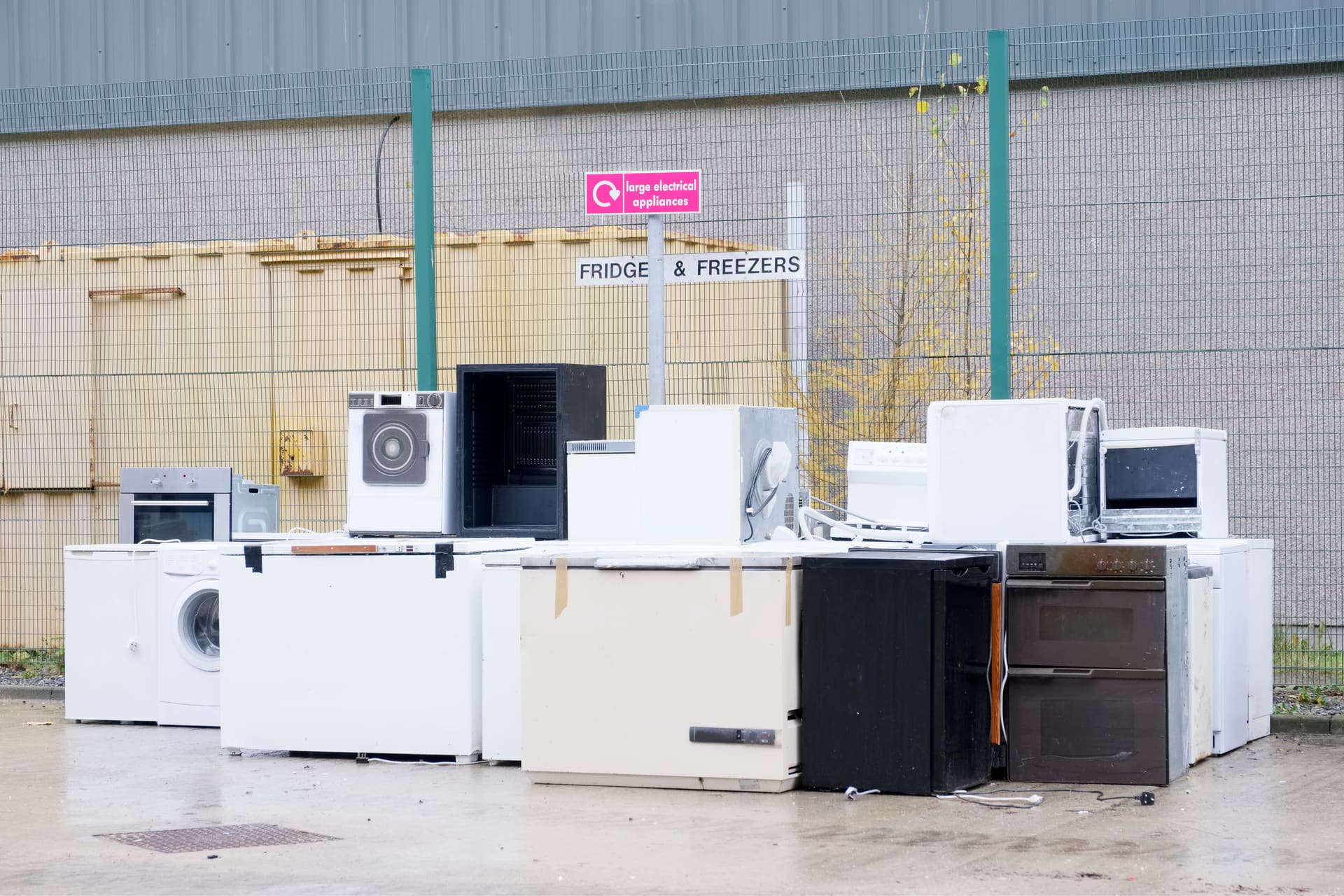
Free pickup services handle full unit turnovers — all appliances in one trip at no charge
Common Landlord Scenarios and Who Is Responsible
Scenario
Who Is Responsible
Landlord-provided refrigerator dies or reaches end of life
Landlord — removal and replacement cost
Tenant brought their own washer, leaves it at move-out
Tenant initially; Landlord handles removal after abandonment waiting period
Built-in dishwasher fails
Landlord — repair or replacement
Water heater needs replacement
Landlord — considered building infrastructure
Tenant abandons a working fridge they brought in
Tenant liable for removal cost; Landlord handles it after waiting period
Landlord-provided appliance damaged by tenant negligence
Tenant — damage costs recoverable from security deposit with documentation
Appliance removal needed for unit renovation between tenancies
Landlord — routine operating cost
How to Handle Appliance Disposal During Unit Turnover
The period between tenants is the most natural time to handle appliance removal. A checklist approach makes turnover smoother:
Inspect all appliances at move-out walkthrough. Test each one. Note condition in writing and with photos. Identify what stays, what needs repair, and what needs replacement.
Decide what to replace vs. repair. If an appliance is more than 10–12 years old and showing problems, replacement is often more cost-effective than repair. See our appliance guides for age and repair-cost benchmarks by appliance type.
Arrange removal before new tenant move-in. Don't wait until the new tenant is already in the unit to arrange removal of the old appliance — it creates complications and inconvenience for the new resident.
Document any tenant-left items separately from landlord-provided appliances for security deposit records.
How Landlords Can Get Appliance Removal for Free
Free appliance pickup services are an excellent fit for landlord use cases. Key advantages for rental property owners:
No charge regardless of appliance age or condition. Whether the refrigerator is 5 years old or 25, working or broken, the pickup is free.
Multiple appliances in one trip. If you're turning over a fully-equipped unit and replacing several appliances at once, a single free pickup handles all of them.
Advance requests. You can request a pickup for a specific date that aligns with your turnover timeline — not just whenever the tenant moves out.
No need to be present for the entire pickup. Coordinate access with the crew and they handle the heavy lifting.
Request a free pickup for your rental property — working or broken, any brand, any condition.
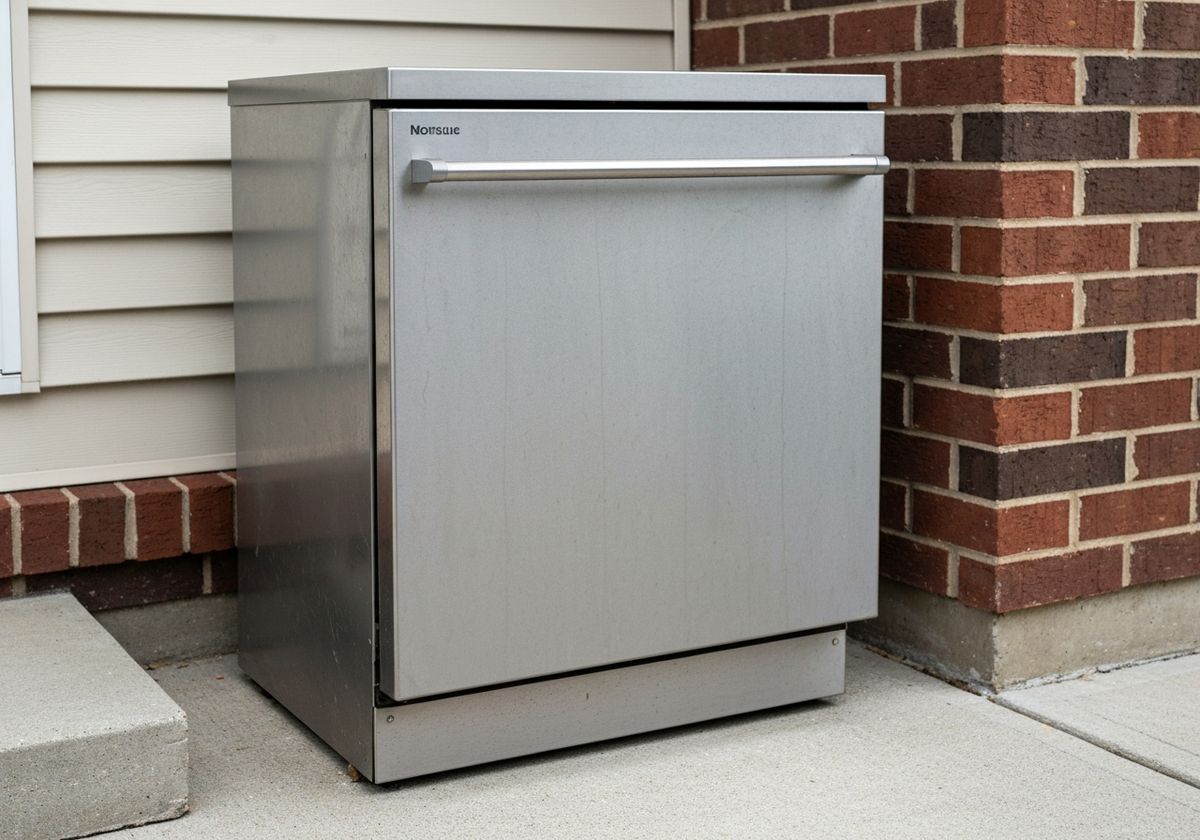
Scheduling pickup during unit turnover eliminates disposal costs and simplifies tenant transition
Can Landlords Deduct Appliance Removal Costs from Security Deposits?
In most states, yes — under the right circumstances. The key conditions:
The appliance must have been tenant-owned (not landlord-provided) and abandoned at move-out, or the tenant must have caused damage to a landlord-provided appliance beyond normal wear and tear.
You must have documentation. Photos of the abandoned item, copies of written notices to the tenant, and receipts or invoices for removal costs are essential.
The deduction must be proportional and reasonable. You can deduct actual removal costs, but you can't deduct more than the documented expense.
State-specific rules apply. Security deposit deduction procedures, required timelines for returning deposits, and itemization requirements vary significantly. Consult your state's landlord-tenant statute or a local real estate attorney for specifics.
Using a free appliance pickup service eliminates the removal cost entirely — meaning there's nothing to deduct, but also nothing you're out of pocket for. If the goal is simply to recoup costs from a tenant who left a mess, free pickup for the appliance itself at least eliminates one line item.
Property Managers with Multiple Units
For landlords managing multiple rental units, establishing a standard process for appliance turnover reduces friction and cost:
Build free pickup into your standard turnover checklist. When a unit becomes vacant, request appliance inspection and free pickup as a standard step rather than an ad-hoc decision.
Batch pickups when possible. If you have multiple units turning over in the same building or nearby, a single crew visit can handle appliances from several units.
Track appliance ages across your portfolio. Knowing which appliances are approaching end of useful life lets you budget for replacements and schedule proactive removal before emergencies.
Coordinate with tenants before move-out. Let tenants know during the move-out process whether they need to disconnect any appliances they're leaving, saving time on pickup day.
Frequently Asked Questions
Can a landlord make a tenant pay for appliance removal?
It depends on who owns the appliance and what the lease says. If the appliance was provided by the landlord as part of the rental, the landlord is generally responsible for its removal and replacement — the tenant cannot typically be charged for a landlord-provided appliance reaching end of life. However, if the tenant brought the appliance themselves, the lease should make clear that they are responsible for removing it at move-out. If tenant-owned appliances are left behind, costs may be recoverable from the security deposit in most states.
What if a tenant refuses to remove their appliance?
If a tenant has moved out and left an appliance, it becomes abandoned property. State abandoned property laws govern the required waiting period before a landlord can dispose of it — this typically ranges from 15 to 30 days depending on the state. The landlord must usually make reasonable efforts to notify the former tenant. After the waiting period, the landlord can arrange removal and may be able to deduct the cost from the security deposit.
How long do I need to store an abandoned appliance?
Abandoned property holding periods vary significantly by state. Many states require 15–30 days after providing written notice to the former tenant's last known address. Some states (like California) have specific dollar thresholds that determine the process required. Check your state's landlord-tenant law or consult a local real estate attorney for the exact requirements in your jurisdiction.
Can I charge tenants for a replacement appliance?
Generally, landlords cannot charge tenants for normal wear and tear or end-of-life appliance replacement if the appliance was landlord-provided. However, if the appliance failed due to tenant misuse, abuse, or negligence, a landlord may be able to deduct repair or replacement costs from the security deposit — but must document the damage and the cause. Routine replacement of an old appliance that reached the end of its useful life is considered a landlord operating expense in most jurisdictions.
Free Appliance Removal for Rental Property Owners
Whether it's a single unit turnover or a multi-unit building, local haulers handle appliance removal at no cost — keeping old appliances out of the landfill. Working units get refurbished and resold; the rest is recycled for scrap. A local hauler will call or text you within 24 hours of your request. Have appliances disconnected and accessible curbside or outside the unit to keep the crew moving.