What Appliances Have the Most Scrap Metal Value in 2026?
Scrap value is the reason free appliance pickup exists — and knowing what your appliance is worth helps you decide whether to sell, donate, or just schedule a removal.
Every old appliance sitting in your garage or basement has a scrap metal value — even if it's completely broken. That value is what makes free appliance pickup economically viable: the metals recovered from your fridge, washer, or water heater pay for the labor to collect them. Understanding this math also helps you make smarter decisions about your old appliances: is it worth selling on Marketplace, donating, dropping at a scrap yard yourself, or simply requesting a free pickup?
This guide breaks down appliance scrap value in detail — by type, by metal, and in the context of current 2026 commodity prices.
How Appliance Scrap Value Is Calculated
Scrap yards don't appraise appliances by model or age — they price them by weight multiplied by the metal type's current market price. Most household appliances are primarily steel (the cheapest metal by weight), with smaller but more valuable quantities of copper and aluminum mixed in.
Here's why copper matters so much: steel currently trades around $0.06–0.10 per pound at scrap yards. Aluminum brings $0.40–0.60 per pound. But copper — found in motors, compressors, wiring, and heat exchangers — commands roughly $3.50–4.00 per pound for #2 copper in 2026. That means a 2-pound copper motor winding is worth as much as 70 pounds of steel. Appliances with more copper content are worth meaningfully more per pound than comparable steel-heavy units.
Note that actual prices fluctuate based on commodity markets. The figures in this guide reflect approximate 2026 averages — check current prices at iScrapApp.com or call your local yard before making decisions based on exact dollar amounts.
Scrap Value by Appliance Type
Appliance
Avg Weight
Key Metals
Est. Scrap Value
Refrigerator
200–300 lbs
Steel, copper (compressor), aluminum (condenser)
$15–40
Chest freezer
100–200 lbs
Steel, copper (compressor)
$10–30
Washing machine
150–200 lbs
Steel, copper (motor & pump)
$10–25
Dryer (electric)
100–150 lbs
Steel, copper (heating element, motor)
$8–20
Dishwasher
60–100 lbs
Steel (tub), copper (motor wiring)
$5–15
Oven / range
100–200 lbs
Steel, cast iron grates
$8–20
Microwave
25–60 lbs
Steel, minimal copper (transformer)
$2–8
Tank water heater
150–300 lbs
Steel tank, copper fittings & anode
$15–40
Tankless water heater
30–80 lbs
Copper heat exchanger (primary), brass fittings
$30–60
Estimates based on approximate 2026 scrap commodity prices. Actual values vary by location and current market conditions.
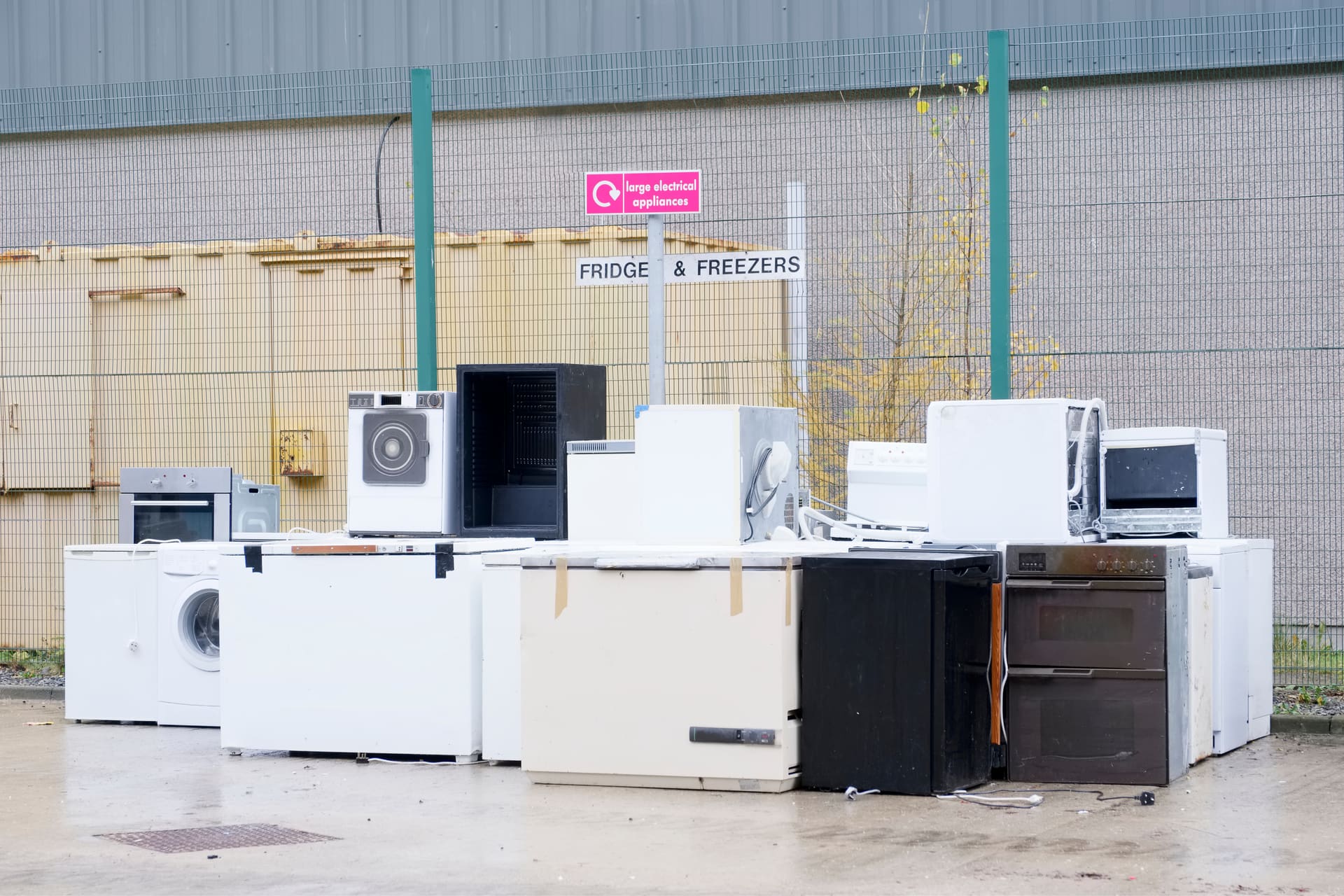
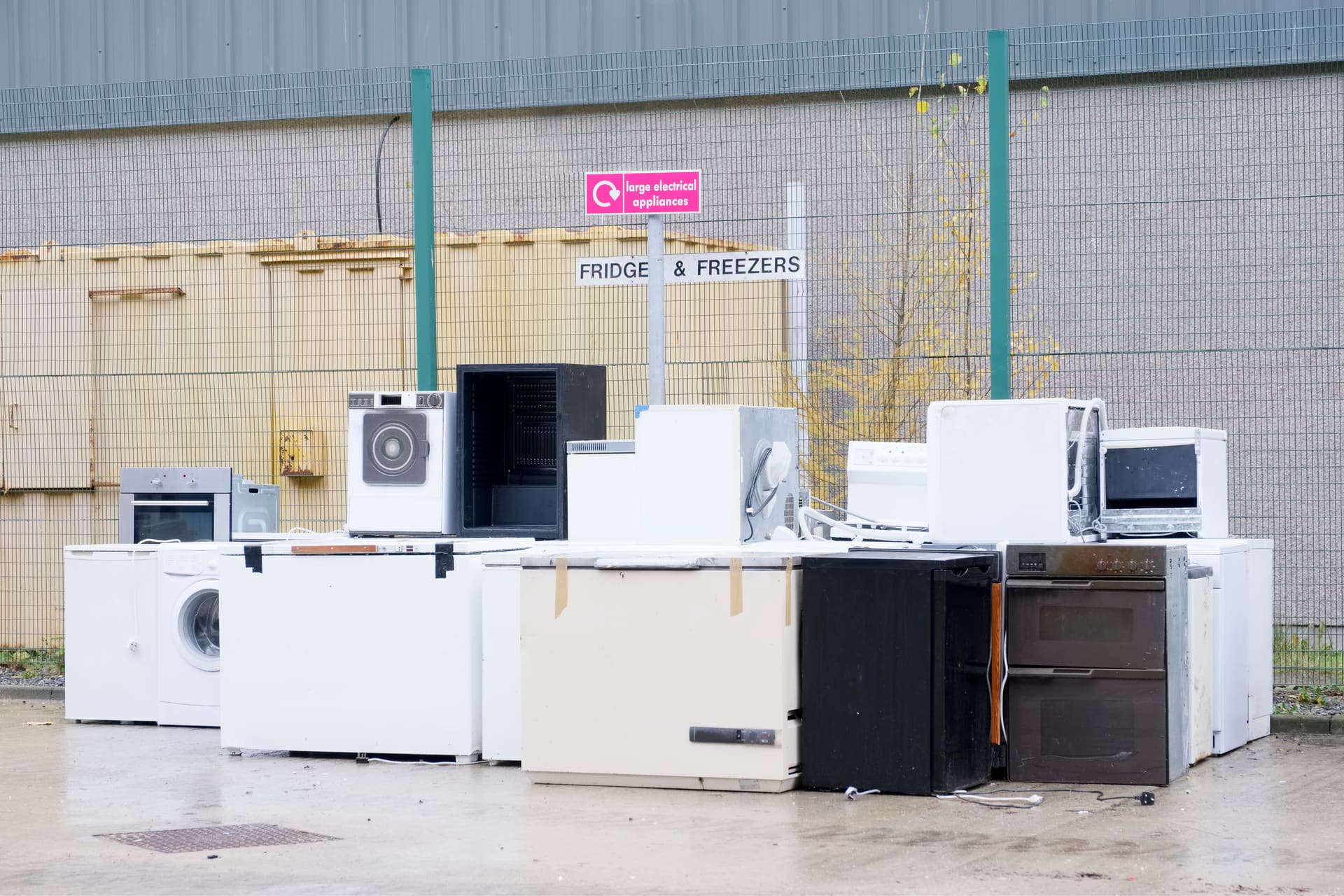
Scrap value is determined by weight and metal composition
Refrigerator vs. Water Heater — Which Is Worth More?
For tank water heaters, the scrap value is comparable to a full-size refrigerator — both typically land in the $15–40 range. A large 80-gallon water heater can push toward the higher end because of sheer steel weight.
The real outlier is the tankless water heater. Unlike tank units that are mostly steel, tankless models are built around a copper heat exchanger — the component that rapidly heats water as it flows through. That heat exchanger can contain 5–15 pounds of copper depending on the unit's capacity. At $3.50–4.00/lb for copper, a single tankless unit can yield $30 to $60 in scrap value despite weighing only 30–80 pounds total. That puts a tankless water heater ahead of a full-size refrigerator on a per-pound basis. See our water heater pickup page for more details.
Standard refrigerators earn their scrap value through volume and compressor copper. A 250-pound French door fridge with its aluminum condenser coils and copper-wound compressor is a solid scrap unit — just not exceptional on a per-pound basis the way tankless water heaters are.
When Is It Worth Selling Instead of Scrapping?
Scrap prices represent the floor of what your appliance is worth, not the ceiling. If your appliance works — or has a diagnosable, fixable problem — it's almost always worth more as a resale unit than as raw metal.
Working appliances: A functional washer, dryer, or refrigerator in decent cosmetic condition typically sells for $50–200 on Facebook Marketplace. Stainless steel French door refrigerators from recognizable brands can fetch $150–400. That's 5–10x the scrap value.
Known-issue units: A washer that works but has a loud bearing, or a fridge that runs but the ice maker is broken, can sell for $25–75 as "needs repair." List the issue honestly and price accordingly.
Parts-only units: Even completely non-working appliances sometimes sell for $10–30 on Marketplace to DIY repair folks who need specific components.
When to just scrap it: If the appliance has major rust, mold, a failed compressor that costs more than the unit is worth, or cosmetic damage that makes it unsellable, the scrap route (or free pickup) is the pragmatic choice. Check the full scrap value guide for more context.
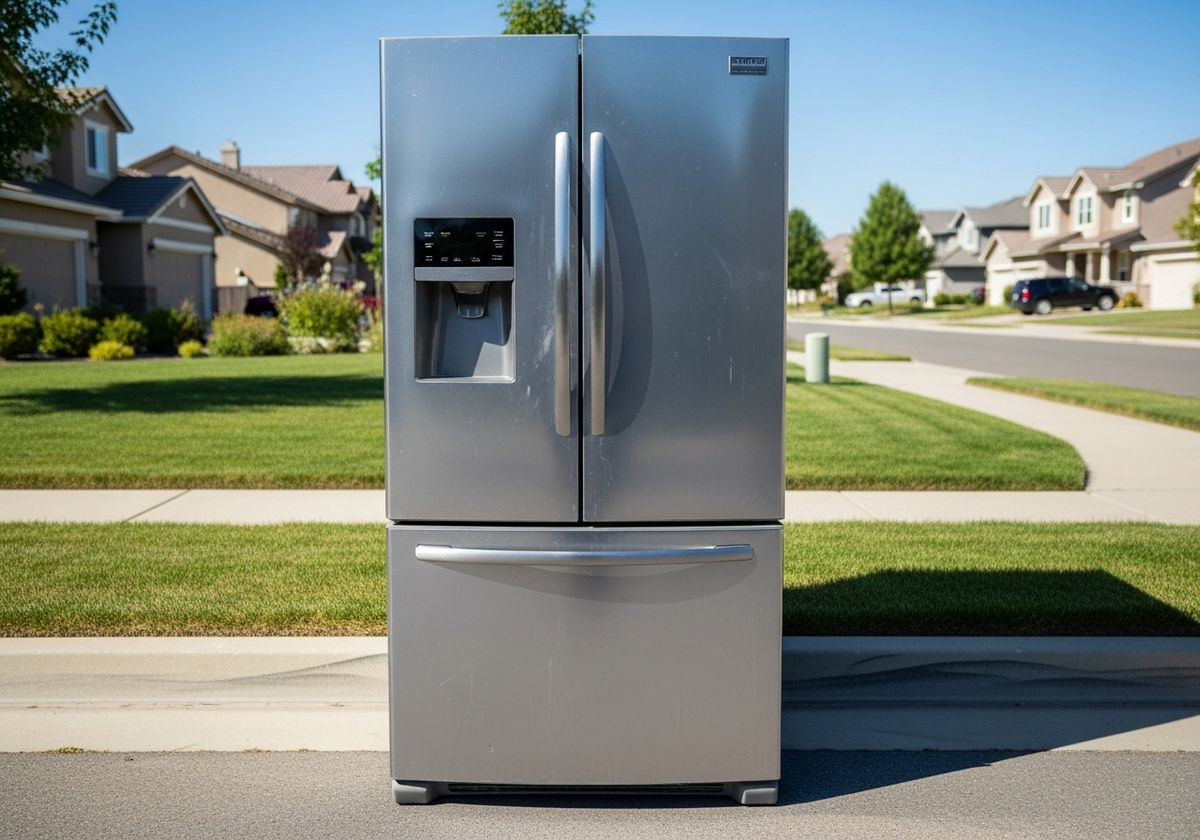
A standard refrigerator yields steel, copper (compressor), and aluminum (condenser coils)
Current Scrap Metal Prices in 2026
These are approximate 2026 averages for the metals found in household appliances. Prices fluctuate weekly based on global commodity markets — what you see at your local yard may vary by 10–20%:
Prepared steel / light iron: $0.06–0.10 per lb. This is the bulk of most appliances.
#2 copper (insulated wire, motor windings): $3.50–4.00 per lb. The highest-value metal in common appliances.
Bare bright copper (uninsulated, clean): $4.00–4.50 per lb. Rare in appliances but found in some heat exchangers.
Aluminum (radiators, condenser fins): $0.40–0.60 per lb. Significant in refrigerators and some HVAC components.
Cast iron: $0.04–0.07 per lb. Lower than steel — oven grates are cast iron, but the weight is minimal.
Brass fittings (water connections): $1.50–2.00 per lb. Small quantities in water heaters and dishwashers.
Why We Can Offer Free Appliance Pickup
The scrap revenue from a single appliance rarely covers the full cost of a dedicated pickup trip on its own — $15–40 per unit doesn't pay for two people, a truck, fuel, and overhead. What makes free pickup sustainable is routing efficiency: when a crew picks up 8–12 appliances in the same neighborhood on the same day, the combined scrap value ($150–400 per run) covers costs and generates a margin.
That's why free pickup services focus on metro areas and request pickups by neighborhood clustering. You benefit from free, professional removal and responsible recycling that keeps appliances out of the landfill. The service benefits from the accumulated scrap value across a route. When you request a free pickup, you're participating in a system that's economically self-sustaining — no subsidies, no hidden costs passed on to you. To help the process along, disconnect the appliance beforehand and have it ready curbside or just outside the garage.
Frequently Asked Questions
Can I get paid cash for my old appliance?
If you bring a large appliance (refrigerator, washer, water heater) directly to a scrap yard yourself, most yards will pay you the scrap weight value on the spot — typically $10–40 per unit in 2026 depending on weight and metal prices. If you use a free pickup service, the scrap value offsets the cost of removal instead of going to you as cash. For a working appliance, selling it on Facebook Marketplace ($50–200) will almost always net more than the scrap price.
What's inside a refrigerator compressor that makes it valuable?
A refrigerator compressor is a sealed steel canister containing a copper motor winding and refrigerant oil. The copper winding is the high-value component — a typical household compressor contains roughly 1–2 lbs of copper wire. At current prices around $3.50–4.00/lb for #2 copper, the compressor alone is worth $5–8 in copper content. Scrappers who specifically harvest compressors will pay $15–25 each because they process them in volume.
Is a washer or dryer worth more in scrap?
Washers are generally worth slightly more than dryers in scrap because they're heavier (150–200 lbs vs. 100–150 lbs) and contain more copper — the motor and pump assembly in a washer has a higher copper content than a dryer's heating element. Electric dryers do contain copper heating coils, but the overall copper weight is lower. Expect roughly $10–25 for a washer vs. $8–20 for an electric dryer at current 2026 scrap prices.
Does the brand of an appliance affect its scrap value?
Appliance brand has almost no effect on scrap value. Scrap yards price by metal type and weight, not by manufacturer. A 250-lb Samsung refrigerator and a 250-lb Whirlpool refrigerator of similar construction will fetch the same scrap price. Brand matters only if you're selling a working appliance on the secondary market, where recognizable brands (LG, Samsung, Sub-Zero) can command higher resale prices than lesser-known manufacturers.
Get Your Appliance Hauled Away for Free
Local haulers handle the scrap — you get free removal and responsible recycling. A local hauler will call or text you within 24 hours of your request. Haulers offset costs by refurbishing and reselling working appliances.