Getting rid of a refrigerator is more complicated than dragging it to the curb — federal law, refrigerant, and sheer weight make it a project. Here are five ways to do it without paying a dime.
A broken or unwanted refrigerator seems like it should be simple to get rid of — just haul it outside, right? Not quite. Refrigerators weigh 200 to 300 pounds, contain refrigerant chemicals regulated by the EPA, and can't go in a standard dumpster or be left at the curb without prior arrangement. Many cities simply won't pick them up with regular bulk trash. Add the fact that most junk removal companies charge $75 to $150 to haul one away, and you've got a problem.
The good news: there are legitimate, completely free options — and some that actually pay you. Here's every realistic route, including what it takes and what to watch out for.
Option 1 — Free Pickup Through a Dedicated Service
The fastest and most reliable free option is scheduling a free refrigerator pickup through a service that handles appliance removal as its core business. Unlike junk haulers who charge by the truckload, dedicated appliance pickup services recover value from the scrap metal (steel, copper coil, aluminum) — enough to cover labor and transportation. That's why they can do it for free.
The key advantages here: these services accept refrigerators in any condition, including non-working units, models with leaks, and old side-by-sides that no charity will take. A two-person crew shows up, handles refrigerant recovery as required by the EPA, and carries the unit out. You don't need to move it yourself or rent a dolly. In most metro areas, same-day and next-day availability are available.
This is usually the right call when your fridge is broken, very old, or located somewhere inconvenient — like a basement or a tight kitchen with no clear path out.
Option 2 — Retailer Haul-Away When You Buy a New Fridge
If you're buying a replacement refrigerator, all three major appliance retailers offer haul-away — but the details matter:
Best Buy: charges a $20 haul-away fee for old appliances when they deliver a new one. This is added at checkout. Must be scheduled at time of delivery — they won't come back for it separately.
Home Depot: haul-away is included free with appliance delivery on most orders over $396. Availability depends on delivery zip code — not all markets participate.
Lowe's: charges approximately $30 for haul-away, added during checkout. Like Best Buy, it must be on delivery day only.
The catch: retailer haul-away only works if you're buying a new fridge from them at the same time. It also requires someone to be home during the delivery window, and the old fridge must be reasonably accessible — crews can't navigate very narrow hallways or carry units up steep stairs.
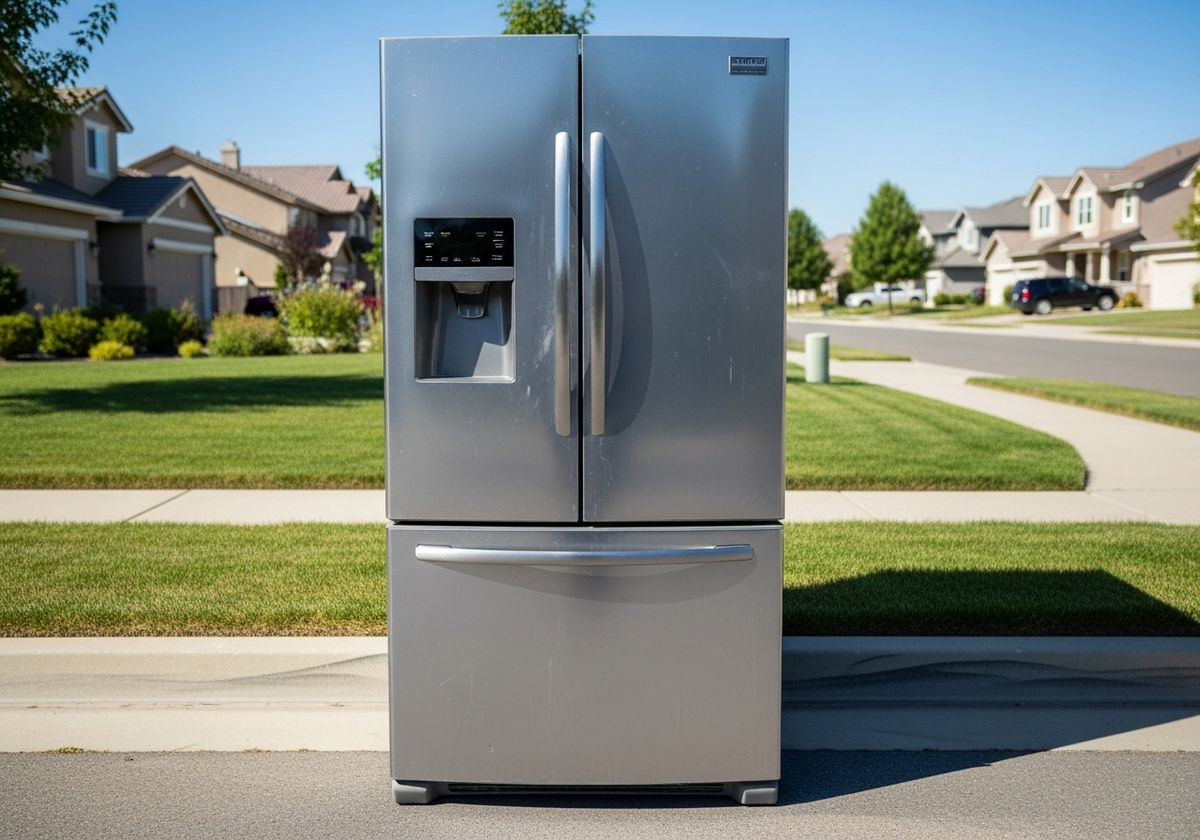
Free refrigerator pickup handles units in any condition
Option 3 — Utility Company Refrigerator Rebate Programs
Many electric utilities across the country run appliance retirement programs that will pick up your old, working refrigerator and pay you a cash rebate, typically $25 to $50. The goal is energy conservation — older fridges often consume 2–3 times the electricity of modern Energy Star models, so utilities save money by getting them off the grid.
A few active programs as of 2026:
Energize Connecticut: $50 rebate for qualifying working refrigerators and freezers picked up from residential customers.
PG&E (California): $50 rebate through their appliance recycling program, pickup included.
National Grid (NY, MA, RI): $50 rebate for working second refrigerators and freezers.
DTE Energy (Michigan): $50 for qualifying refrigerators, $25 for freezers.
To qualify, the refrigerator must be working — typically defined as reaching and holding 35–40°F. Most programs also require it to be at least 10 cubic feet. Check your utility's website directly; many use JACO Environmental as their pickup contractor.
Option 4 — Donate a Working Refrigerator
If your fridge is in good working condition, donation is a meaningful option. Organizations that accept working appliances include:
Habitat for Humanity ReStore: accepts working refrigerators at most locations. Some ReStore locations offer free pickup for large appliances — call your local store to confirm. Items are resold to fund Habitat home builds.
Local food banks and community fridges: some food banks or mutual aid organizations actively seek working refrigerators. Reach out directly — availability varies by city.
Salvation Army: accepts appliances at select locations. Call before bringing one in; not all stores take refrigerators due to space constraints.
Requirements typically include: the unit must cool properly, no broken shelves or missing drawers, clean interior, and typically less than 15 years old. Refrigerators with known mechanical issues, coolant problems, or significant rust generally won't be accepted.
Option 5 — Sell for Parts or Scrap
A working refrigerator posted on Facebook Marketplace or Craigslist can sell for $50 to $150 — sometimes more for stainless steel models in good shape. Even non-working units often get $25 to $75 listed as "parts or repair." Post clear photos, list the model number, note any issues honestly, and price it to move quickly.
For non-working units with no buyer interest, a local scrap yard will take the metal. The refrigerator itself is worth $15 to $40 in scrap (mostly steel), but the compressor alone has a copper component worth $15 to $25 to a dedicated scrapper. If you're willing to let someone pick it up themselves, listing it as "free scrap — must haul" on Facebook Marketplace often gets a response within hours from local metal recyclers.
What NOT to Do With an Old Refrigerator
A few disposal methods that seem convenient but cause real problems:
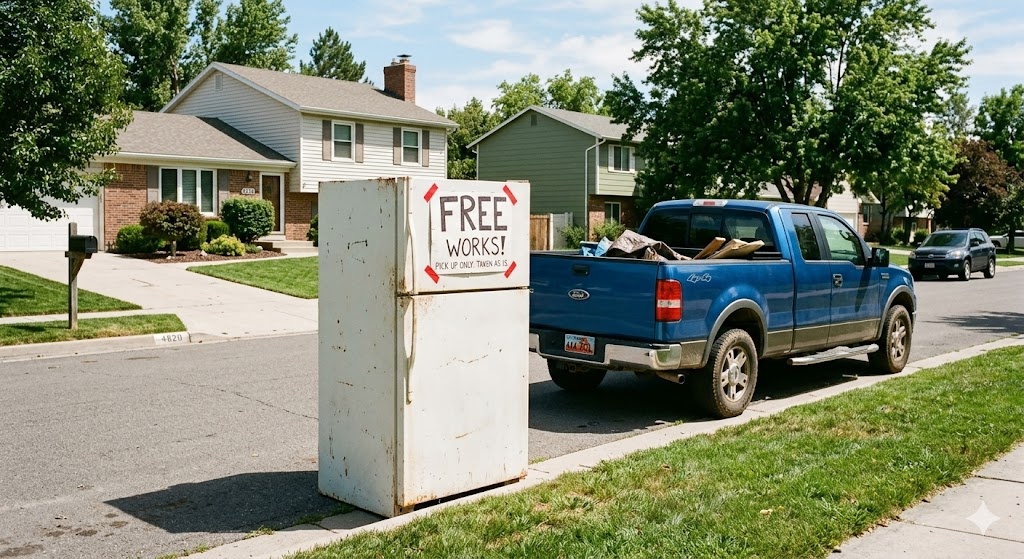
Leave it at the curb without prior arrangement. In most cities this is illegal for refrigerators specifically because of the refrigerant. You can receive fines, and your waste hauler may refuse to take it even if left out for bulk pickup day.
Throw it in a dumpster. Dumpsters at apartment complexes, job sites, and commercial properties are not rated for appliances with refrigerant. This is an EPA violation and the dumpster owner can be held liable.
Put it in the regular trash. No municipal trash truck is equipped or permitted to handle refrigerant-containing appliances. It won't be picked up.
Cut the refrigerant lines yourself. This releases hydrofluorocarbons into the atmosphere and is a federal violation under the Clean Air Act, with fines up to $44,539 per day.
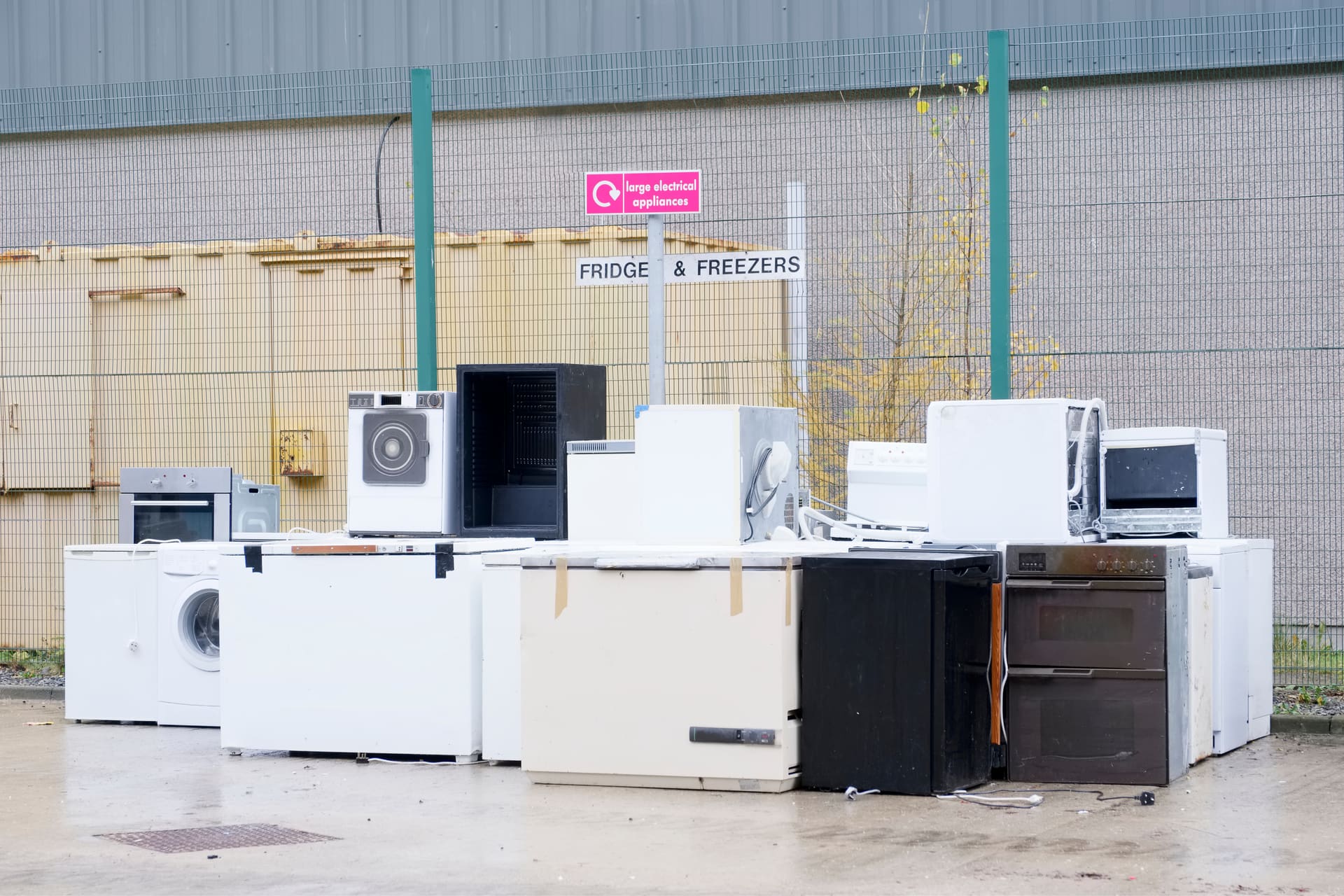
Appliances recovered for scrap metal recycling — steel, copper, and aluminum are all reused
How to Prepare Your Refrigerator for Pickup
Regardless of which route you choose, a little prep makes the process smoother:
Empty it completely. Remove all food, drawers, and loose shelves. Leave the shelves inside if you're donating — they add to the value. Remove them if you're scrapping.
Defrost it. If the fridge has accumulated frost, unplug it 24 hours before pickup and let it defrost. Place towels down to catch water. This prevents a mess in transit and protects your floors.
Disconnect the water line if applicable. French door and side-by-side models with ice makers usually have a water supply line running to the wall. Turn off the shutoff valve (usually behind the fridge or under the sink) and disconnect the line. Have a towel ready — there may be residual water in the line.
Clear a path. Measure doorways if needed. A standard full-size refrigerator is about 30–36 inches wide, and most interior doors are 32–36 inches. If it came in, it'll go out — but crew members need room to tilt and maneuver it.
You don't need to move the fridge yourself before a professional pickup crew arrives. Just make sure the path from the fridge to your front door (or garage) is clear of obstacles.
Frequently Asked Questions
Can I put a fridge on the curb for bulk pickup?
In most U.S. cities, you cannot leave a refrigerator on the curb for regular bulk trash pickup without prior arrangement. Refrigerators contain refrigerant (Freon or similar compounds) that must be recovered by a certified technician before disposal — it's federal law under the Clean Air Act. Some municipalities offer scheduled appliance pickup where they send a certified crew, but most cities do not. Check with your local waste management authority first, and never leave a fridge curbside without confirming refrigerant recovery is included.
What happens to the Freon in my old fridge?
Before a refrigerator can be legally scrapped or recycled, a certified technician must recover the refrigerant using an EPA-approved recovery machine. The refrigerant is then either reclaimed and reused or destroyed. This is required under Section 608 of the Clean Air Act. Releasing refrigerant into the atmosphere is illegal and carries fines up to $44,539 per day per violation. Reputable pickup services handle this as part of the process at no cost to you.
How much does a refrigerator weigh?
A standard full-size refrigerator typically weighs between 200 and 300 pounds depending on size and style. French door and side-by-side models tend to be heavier (250–350 lbs), while compact or mini fridges weigh 50–100 lbs. This weight is a big reason why moving a fridge alone is unsafe — professional pickup crews always send two people.
Will you pick up a refrigerator that doesn't work?
Yes. AppliancePickupNow picks up refrigerators regardless of condition — broken, not cooling, leaking, or completely dead. The scrap metal value (steel, copper, aluminum) covers the cost of removal even when the appliance has no resale value. You don't need to get it working again before requesting a pickup.
Ready to Get Rid of Your Old Fridge?
Local haulers pick up refrigerators in any condition — free, fast, and with proper refrigerant disposal handled. Working units get refurbished and resold; the rest is recycled, keeping it out of the landfill. A local hauler will call or text you within 24 hours.