Appliance Recycling: What Actually Happens After Pickup
Most people assume their old appliances end up in a landfill. They mostly don't. Here's the complete chain — from refrigerant recovery at your house to steel entering a mill.
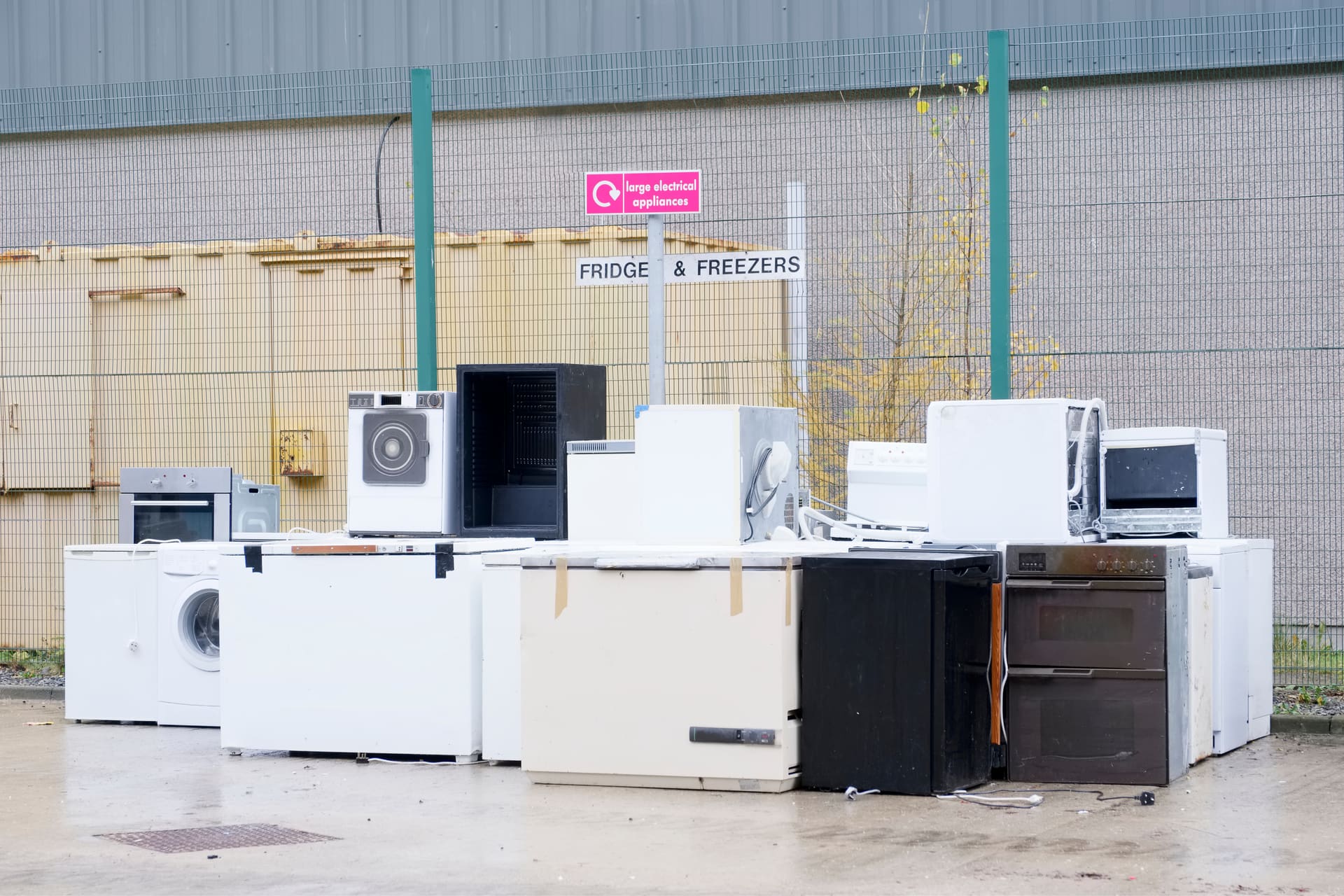
When a pickup crew drives away with your old refrigerator or washing machine, where does it actually go? The honest answer surprises most people: a large majority of the material in a household appliance is recycled, not landfilled. A typical washing machine is about 90% recyclable by weight. Even a refrigerator — which contains more complex materials including foam insulation and refrigerant — recovers roughly 85% of its mass as usable material.
But the process isn't as simple as throwing a fridge in a crusher. There are legal requirements, specialized equipment, and a carefully sequenced demanufacturing process that happens before a single pound of steel reaches a mill. Here's exactly what that process looks like, step by step.
Step 1 — Refrigerant Recovery
For any appliance with a sealed cooling system — refrigerators, chest and upright freezers, window air conditioners, and dehumidifiers — the very first step, before anything else happens, is refrigerant recovery. This is not optional. It is required by federal law under Section 608 of the Clean Air Act.
A technician certified under EPA Section 608 connects an EPA-approved recovery machine to the appliance's refrigerant circuit. The machine pulls the refrigerant out of the system under vacuum and captures it in a recovery cylinder — it never contacts the atmosphere. Depending on the refrigerant type and the size of the system, this takes 5 to 20 minutes per unit.
The specific refrigerant matters. Older appliances (pre-1994) may contain R-12 (Freon), a chlorofluorocarbon with significant ozone-depleting potential. Most units from the 1990s through 2010s use R-134a, a hydrofluorocarbon with high global warming potential — roughly 1,430 times that of CO2 over 100 years. Newer units increasingly use R-600a (isobutane), a hydrocarbon with much lower climate impact. All of these must be captured and either reclaimed for reuse or sent to a destruction facility. Venting even a small amount is illegal and carries fines up to $44,539 per day per violation.
After recovery, the refrigerant goes to a reclamation facility where it's tested, filtered, and reprocessed to meet purity standards for reuse — or destroyed via high-temperature incineration if it's too contaminated or is a banned substance like R-12.
Step 2 — Hazardous Material Removal
Before an appliance can enter a shredder, several additional hazardous components must be manually removed:
Compressor oil: The sealed compressor contains lubricating oil that circulates with the refrigerant. After refrigerant recovery, technicians drain and collect this oil. It cannot go down a drain — it's classified as hazardous waste and must be disposed of at a licensed facility.
Mercury switches: Appliances manufactured before approximately 2000 may contain mercury tilt switches or reed switches in the door light circuit or thermostat. Mercury is a neurotoxin; even small amounts are heavily regulated. Trained technicians identify and remove these before shredding. The National Electrical Manufacturers Association (NEMA) ran a voluntary mercury switch recovery program for appliances for over a decade to address this.
PCB-containing capacitors: Older fluorescent light starters and some motor run capacitors in pre-1980s appliances may contain polychlorinated biphenyls (PCBs), classified as probable human carcinogens. These are removed and sent to hazardous waste processors.
Foam insulation blowing agents: Refrigerator insulation foam manufactured before approximately 2005 was often blown with HCFCs (like HCFC-141b), which are ozone-depleting substances. Newer foams use HFCs or cyclopentane, but all foam must be carefully managed during shredding to prevent blowing agent release. Many certified recyclers use vacuum shredding systems that capture these gases.
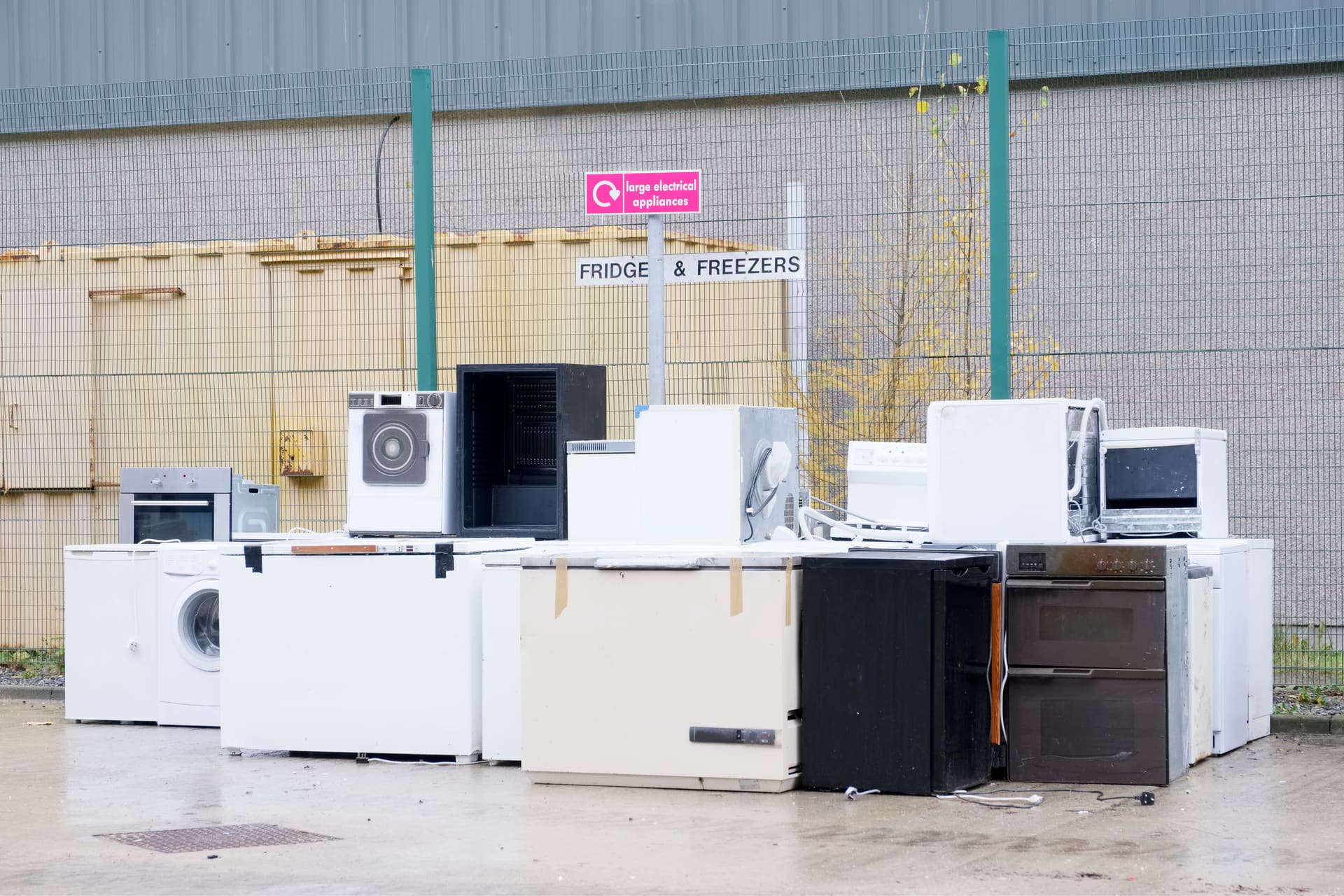
After hazardous material removal, appliances move to industrial shredding and material separation
Step 3 — Demanufacturing and Shredding
Once hazardous materials are removed, the appliance body enters the demanufacturing line. At large-scale recycling facilities, this involves industrial shredders — massive machines that reduce a full-size refrigerator to fist-sized fragments in seconds. The shredder output is a mixed stream of steel, copper, aluminum, plastic, foam, and rubber.
Separating that mix is where the engineering gets interesting:
Magnetic separation: Large overhead magnets or magnetic drum separators pull ferrous steel out of the shredded stream. Steel is the dominant material by weight in most appliances, so this is the highest-volume recovery step.
Eddy current separators: These use a rapidly rotating magnetic field to induce eddy currents in non-ferrous metals (aluminum, copper), which creates a repulsive force that flings them out of the stream. This separates aluminum from the remaining mix.
Density separation: Heavy media separators or sink-float tanks use liquid density to separate heavier metals (copper) from lighter materials (plastic, foam).
Manual sorting stations: Skilled sorters on a picking line pull out copper wiring harnesses, motor windings, and brass components that automated systems miss. These high-value materials are bundled separately for direct sale to smelters.
Step 4 — Material Processing and Final Destinations
Each recovered material stream goes to a different downstream processor:
Steel goes to electric arc furnace steel mills, where it's melted and recast as new steel. Recycled steel requires about 74% less energy than producing virgin steel from iron ore. Major appliance-consuming steel mills operate across the U.S., including facilities in Indiana, Ohio, and Alabama.
Copper is sold to copper smelters and wire rod mills. Recovered appliance copper is classified as #2 copper (mixed, insulated) or bare bright copper depending on processing — both are fully recyclable into new wire, pipe, and components.
Aluminum goes to aluminum foundries or secondary smelters. Recycling aluminum uses only about 5% of the energy required to produce primary aluminum from bauxite — one of the highest energy savings of any recycled material.
Plastics from appliances are a more complex stream. Some engineering plastics (ABS, HIPS from inner liners and door panels) can be pelletized and reused in lower-grade applications. Others go to energy recovery (waste-to-energy incineration) rather than material recycling.
Foam insulation presents ongoing challenges. Polyurethane foam from appliance walls is difficult to recycle into useful products and often ends up in energy recovery or landfill — it represents the largest non-recyclable fraction of most refrigerators.
The compressor and condenser coils account for most of a refrigerator's recoverable copper
What Percentage of an Appliance Is Actually Recycled?
Appliance
Recyclable by Weight
Primary Non-Recyclable Fraction
Refrigerator
~85%
Foam insulation, gaskets
Chest freezer
~83%
Foam insulation, plastic liner
Washing machine
~90%
Rubber seals, plastic tub (front-loaders)
Electric dryer
~88%
Drum seals, plastic components
Dishwasher
~75%
Plastic interior, door liner, spray arms
Oven / range
~92%
Gaskets, fiberglass insulation (wall ovens)
Microwave
~60%
Circuit board, magnetron, mixed plastics
E-Waste Processing for Microwaves and Electronics-Heavy Appliances
Modern appliances increasingly contain circuit boards, digital displays, and control modules that fall into the e-waste category. Microwaves in particular are heavy on electronics relative to their metal content — the magnetron tube, control board, and capacitor bank require e-waste processing rather than simple shredding.
Certified e-waste recyclers holding R2 (Responsible Recycling) or e-Stewards certification handle these components. The process involves manual disassembly to separate the circuit board, leaded solder, and capacitors. Circuit boards are processed by certified smelters that recover gold, silver, palladium, and copper from the board substrate. The high-voltage capacitor in a microwave requires careful discharge before handling — it can store a lethal charge even weeks after the unit was last powered on.
The e-Stewards and R2 standards both prohibit exporting hazardous e-waste to developing countries where informal processing (burning, acid leaching) causes serious public health harm. When choosing a pickup or recycling service, these certifications are the most reliable indicator of responsible downstream handling. See the appliance scrap value guide for how the material economics of these streams work.
What Actually Goes to Landfill
Despite high overall recycling rates, some fraction of every appliance does end up in landfill. The main culprits:
Polyurethane foam insulation from refrigerator and freezer walls. While technically combustible, most foam recycling processes are not yet economically viable at scale. Foam that contained HCFC blowing agents requires special handling; some goes to high-temperature incineration rather than landfill, but this varies by region.
Rubber gaskets and seals. Door seals, drum gaskets, and various rubber components are typically too contaminated and too small to sort economically.
Laminated or composite plastics. Multi-layer plastic components from inner door panels or control housings that can't be identified and sorted by resin type go to residual waste.
Fiberglass insulation from wall ovens and some range hoods isn't recyclable through typical streams.
The combined non-recyclable fraction is typically 10–25% by weight depending on appliance type. That fraction going to a properly lined municipal solid waste landfill is far preferable to the entire appliance going there — particularly because the regulated substances (refrigerant, compressor oil, mercury) have already been properly removed before any of this material reaches a landfill cell.
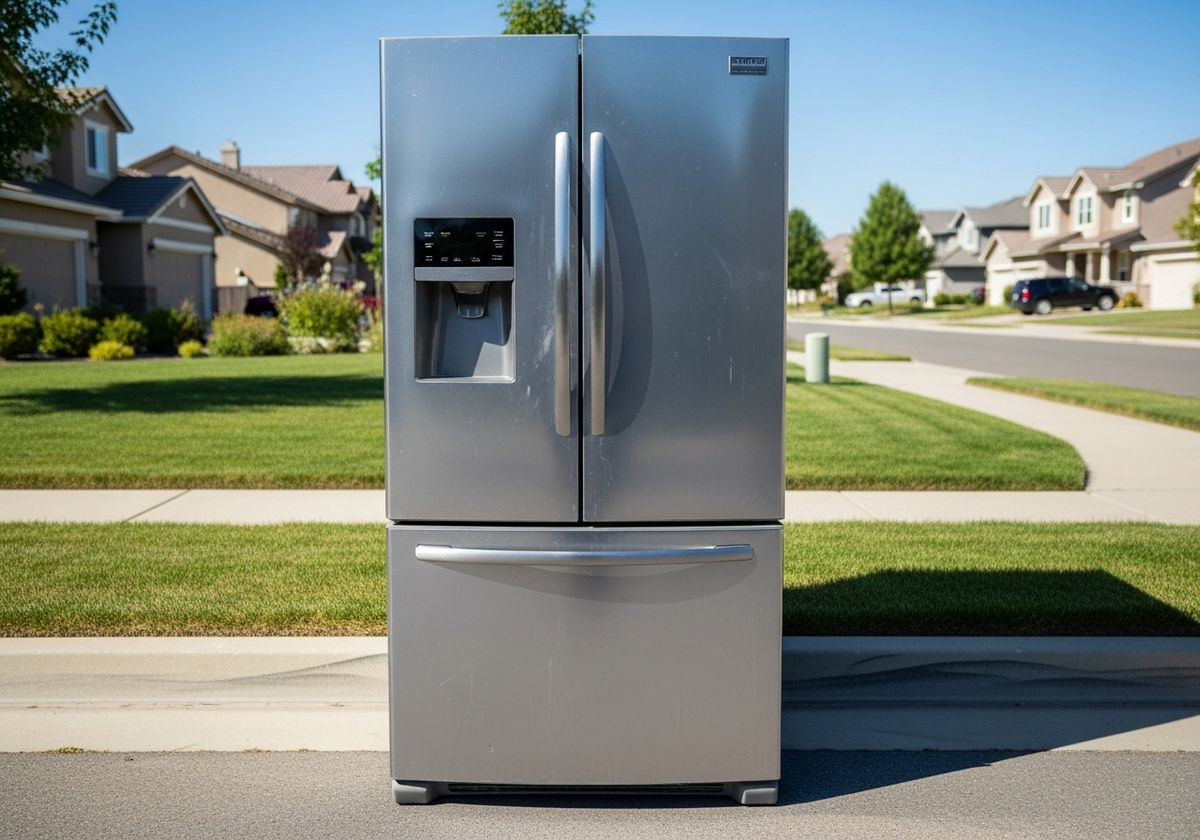
When you request a free appliance pickup, you're ensuring this full process happens — regulated substance recovery, hazardous material handling, and maximum material recovery — rather than the appliance sitting in storage or being illegally dumped where none of those steps occur. To make pickup day smooth, disconnect the appliance beforehand and position it curbside or just outside the garage so the hauler can load it quickly.
Frequently Asked Questions
Is appliance recycling actually better than sending to landfill?
Significantly better, for two reasons. First, appliances contain regulated substances — refrigerants, compressor oils, mercury switches, and foam blowing agents — that must not enter a landfill where they can leach into soil and groundwater. Second, the metals in appliances (steel, copper, aluminum) are infinitely recyclable without degradation. Recycling a ton of steel saves about 1,400 lbs of coal, 2,500 lbs of iron ore, and 120 lbs of limestone compared to producing virgin steel. Sending an appliance to a properly certified recycler instead of a landfill avoids both the hazardous material risk and the energy cost of mining and refining new metal.
What happens to the compressor when an appliance is recycled?
After refrigerant recovery, the compressor is removed from the appliance. It still contains compressor oil which must be drained and disposed of as hazardous waste — it cannot go down a drain or into the general waste stream. Once drained, the steel compressor casing is shredded with the rest of the appliance body. The copper motor winding inside is separated during the eddy current or density separation stage and sent to a copper smelter. The whole process is designed to recover every recoverable component.
Are refrigerator magnets recyclable?
The flexible rubber magnets commonly found on refrigerators are not recyclable through standard metal recycling streams. They're made from a composite of ferrite powder bonded in a rubber or vinyl matrix — the materials can't be cleanly separated. Remove them and throw them in the regular trash before pickup. The refrigerator itself is highly recyclable; the magnet is just a surface accessory.
How do I know my appliance was recycled responsibly?
The best indicator is whether the pickup service uses certified processing partners. For e-waste components (circuit boards, control panels), look for processors with R2 (Responsible Recycling) or e-Stewards certification — these are third-party audited standards that prohibit export of hazardous e-waste to developing countries. For refrigerant recovery specifically, ask whether the technician holds EPA Section 608 certification. Reputable appliance pickup services can tell you which processing facility their materials go to.
Request a Pickup — We Recycle Responsibly
A local hauler will call or text you within 24 hours of your request. Refrigerant recovery, hazardous material handling, and maximum metal recovery — all included, all free. Haulers refurbish and resell working units — that's how your pickup stays free.